Libraries: the home of books. And the inspiration for some great books of their own!
To celebrate Discover Your Library Day - a campaign by The Reading Agency to shine a light on the vital role of public libraries - here's our list of 10 great books about libraries, books, and readers.
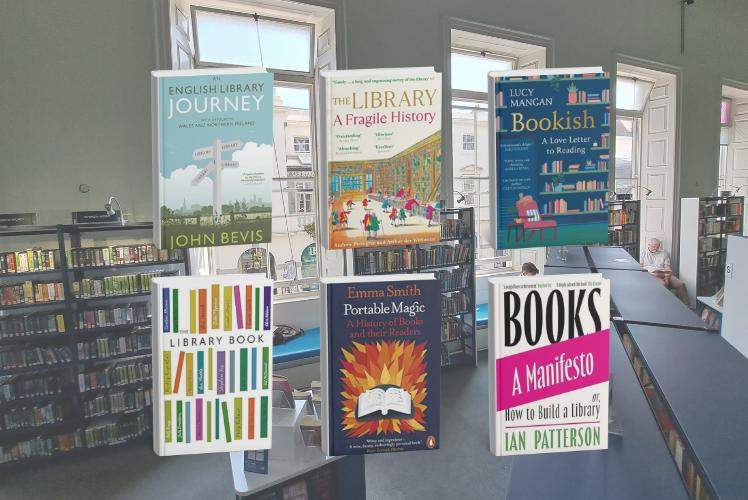
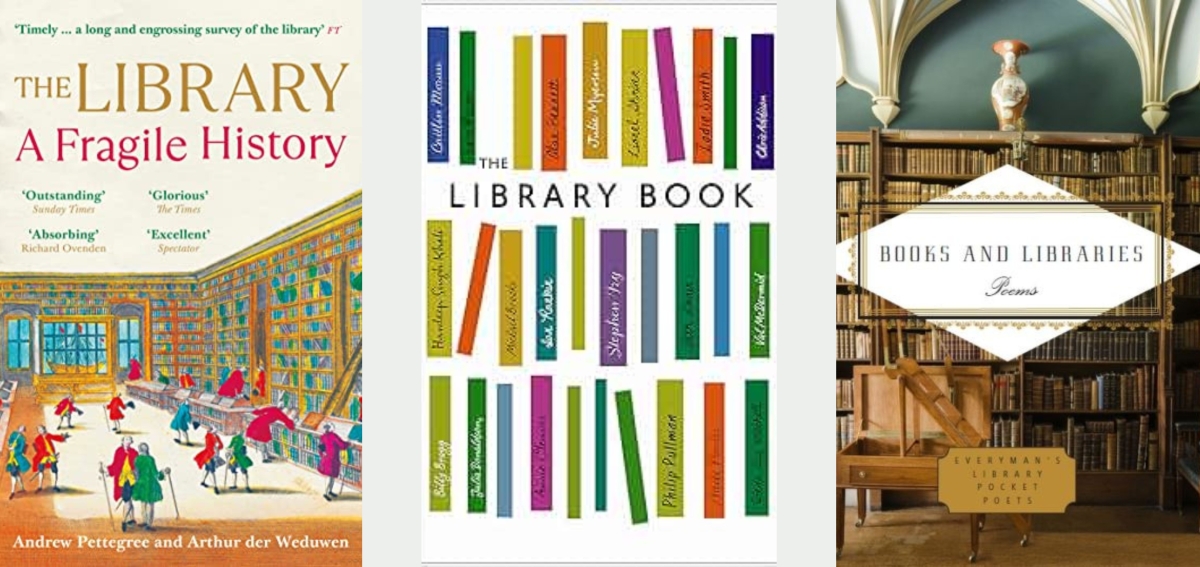
The Library: A Fragile History by Andrew Pettegree and Arthur der Weduwen
Famed across the known world, jealously guarded by private collectors, built up over centuries, destroyed in a single day, ornamented with gold leaf and frescoes or filled with bean bags and children's drawings - the history of the library is rich, varied and stuffed full of incident.
Andrew Pettegree and Arthur der Weduwen explore the contested and dramatic history of the library, from the famous collections of the ancient world to the embattled public resources we cherish today. Along the way, they introduce us to the antiquarians and philanthropists who shaped the world's great collections, trace the rise and fall of fashions and tastes, and reveal the high crimes and misdemeanours committed in pursuit of rare and valuable manuscripts.
From Alan Bennett's 'Baffled at a Bookcase', to Lucy Mangan's 'Ten Library Rules', this collection includes a variety of famous authors writing on how libraries are used and why they’re important.
Tom Holland writes about libraries in the ancient world, while Seth Godin describes what a library will look like in the future. Lionel Shriver thinks books are the best investment, Hardeep Singh Kohli makes a confession, and Julie Myerson remembers how her career began beside the shelves.
If you love libraries, you’ll love this library book.
Books and Libraries: Poems by Andrew Scrimgeour
A remarkably diverse treasury of literary celebrations, this title is sure to take pride of place on the shelves of the book-obsessed.
Feminist Librarianship: Principles, Practices and Provocations by Kirsten MacQuarrie
Alive and aloud with women's own voices, this is the UK's first comprehensive celebration of library-led feminism: capturing the underrated yet radical work taking place across our female-centric sector to catalyse gender justice through social, political, environmental and intergenerational change.
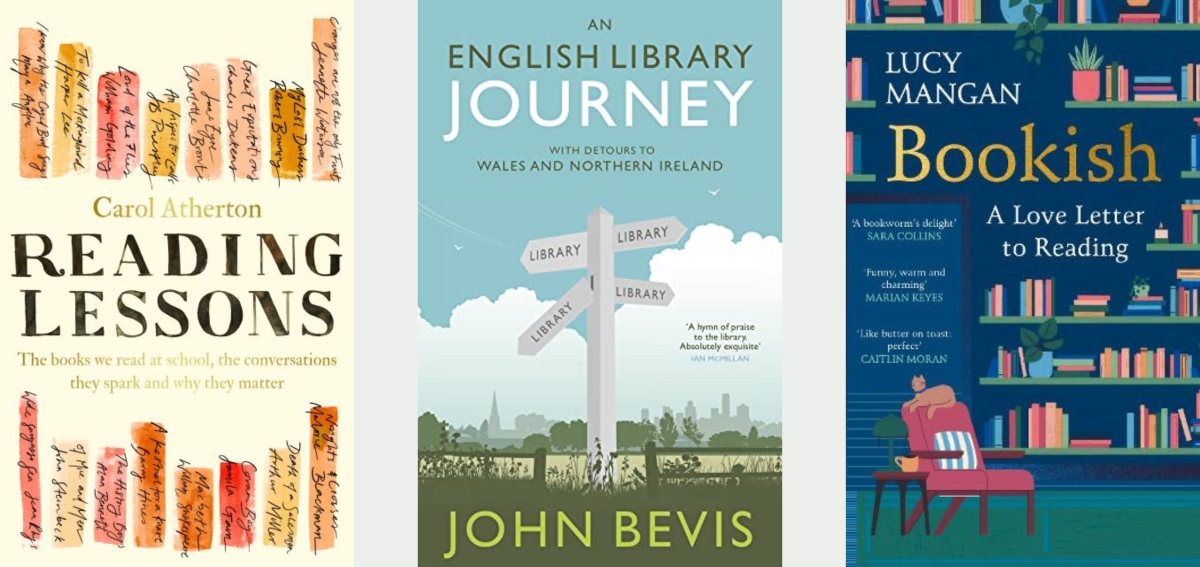
An English Library Journey: With Detours to Wales and Northern Ireland by John Bevis
Ten years in the writing, this is a witty, impassioned tour of England's libraries by a writer and book-lover who made it his mission to enrol at every library authority in England. As interested in the people he finds as he is in the buildings, this will appeal to anyone who has ever visited a public library.
Bookish: How Books Shape Our Lives by Lucy Mangan
As a child, Lucy Mangan was reading all the time, using books to navigate the challenges and complexities of this world and many others. As an adult, she uses her new relationship with literature to seize upon the most important question: (how) do books prepare us for life?
'Bookish' picks up where 'Bookworm' left off: at the cusp of teenage, when everything - including the way we read - undergoes a not-so-subtle transformation.
Revisiting the books of all genres, that ferried her through each important stage of life, 'Bookish' is a coming-of-age in books. It's an ode to our favourite bookish spaces - from the smallest second-hand bookstalls to libraries, glorious big bookshops and our very own book rooms - and a love story to how books not only shelter our souls through hard times and help us find ourselves when we feel lost, but also help us connect with the people we love through shared stories.
Reading Lessons: The Books We Read at School, The Conversations They Spark and Why They Matter by Carol Atherton
How can a Victorian poem help teenagers understand YouTube misogyny? Can Jane Eyre encourage us to speak out? What can Lady Macbeth teach us about empathy? Should our expectations for our future be any greater than Pip's? And why is it so important to make space for these conversations in the first place?
In a career spanning almost three decades, English teacher Carol Atherton has taught generations of students texts that will be familiar to many of us from our own schooldays. But while the staples of exam syllabuses and reading lists remain largely unchanged, their significance - and their relevance - evolves with each class, as it encounters them for the first time.
Each chapter of 'Reading Lessons' invites us to take a fresh look at these novels, plays and poems, revealing how they have shaped our beliefs, our values, and how we interact as a society.
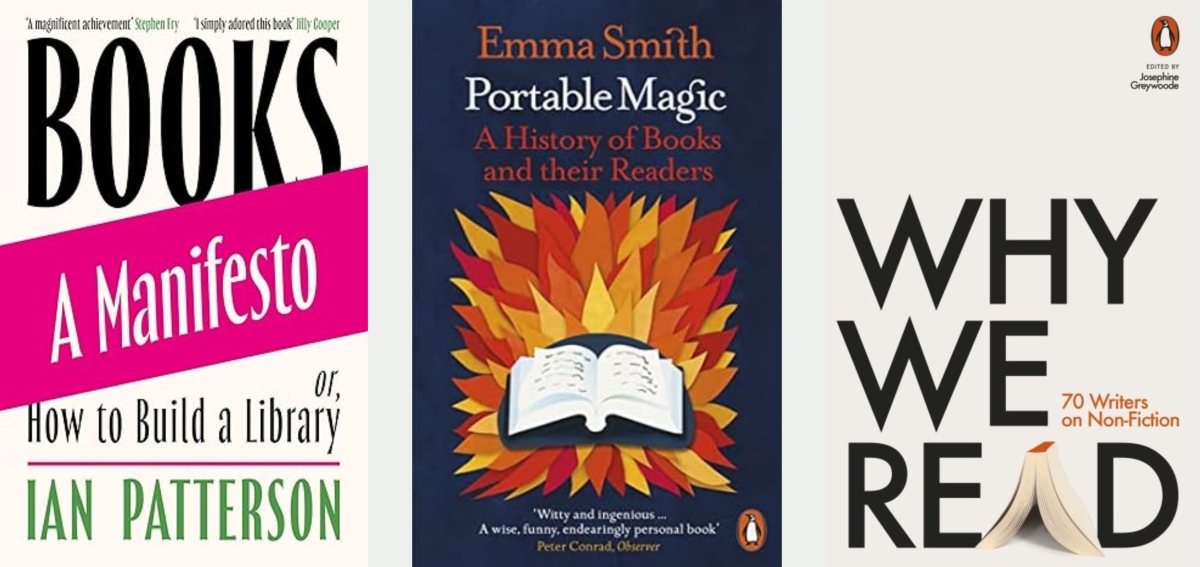
Portable Magic: A History of Books and Their Readers by Emma Smith
Most of what we say about books is really about their contents: the rosy nostalgic glow for childhood reading, the lifetime companionship of a much-loved novel. But books are things as well as words, objects in our lives as well as worlds in our heads. And just as we crack their spines, loosen their leaves and write in their margins, so they disrupt and disorder us in turn. All books are, as Stephen King put it, 'a uniquely portable magic'. In this thrilling history, Emma Smith shows us why.
Books: A Manifesto, or, How to Build a Library by Ian Patterson
Reading is a necessary part of reality, and an unavoidable part of everyday life. We live within language, and using it is as natural to us as breathing. When we think, it's what we think with. This a book about books, about the subversive power of reading, and about the strange nature of books as objects. Ever since childhood, books have been at the centre of Ian Patterson's life, as a poet, teacher, translator, bookseller and collector. As he constructs the last of many libraries, he makes a case for the radical importance of reading in our lives, from Proust to Jilly Cooper, detective novels to avant garde poetry. At once a primer and a manifesto, this volume is an impassioned invitation into a deeper, richer world of thinking and feeling.
Why We Read by Penguin
Why read non-fiction? Is it just to find things out? Or is it for pleasure, challenge, adventure, meaning? Here, in seventy new pieces, some of the most original writers and thinkers of our time give their answers. From Hilton Als on reading as writing's dearest companion to Nicci Gerrard on reading for her life; from Malcolm Gladwell on entering the minds of others to Michael Lewis on books as secret discoveries; and from Lea Ypi on the search for freedom to Slavoj Zizek on violent readings, each offers their own surprising perspective on the simple act of turning a page. The result is a celebration of seeing the world in new ways - and of having our minds changed.